
Alleged leaked classified UFO video released by fake news channel


A new video (seen above) has been posted by KWBV News 6 in Phoenix that alleges to be leaked classified footage of what looks like a dog fight between jets and UFOs. The video purports to be from the same day and in the same area as a famous mass UFO sighting in Phoenix in March of 1997. The problem is there is no KWBV News 6 in Phoenix.
Actually, the problems with the credibility of the video do not stop with the fake news channel. The video was posted on a YouTube channel using the name David Collins. The KWBV news website claims “David Collins is an investigative journalist, living in Phoenix, Arizona. David was embedded with coalition forces in the Operation Iraqi Freedom and Operation New Dawn, and has covered human interest stories since 1989.”
However, there doesn’t seem to really be a journalist named David Collins as described. Furthermore, although Collins appears to be the only journalist writing for KWBV, his stories are all about him and written in the third person.
Other stories on the site include cattle mutilations and a missing persons case from March, 1997. The same month as the Phoenix Lights UFO incident. There are also stories about the “longest running missing person’s case,” and “the most infamous killer in Arizona State history.” Neither the missing persons case nor the killer appear to be real.
One of the stories references another news channel, KUDP, which also does not exist, and doesn’t even have a fake news website like KWBV.
Frank Warren, who runs the website UFO Chronicles, says he found that the website was created earlier this year, even though some stories are back dated to 1997.
So why go to all the trouble making the fake websites and videos? Clues to that answer may be found in yet another fake website called American Crimes. This website is for an alleged television show that will be hosted by Collins. In a video posted in July on his YouTube page, Collins describes the first episode of the series. The outline of the show may be telling.
The description of the video reads:
This series examines Arizona’s longest running missing person’s case, The “Lauder Case”, and the most infamous killer in Arizona State history, Walton Samuel Gayson. Known as the “Alien Killer” Gayson was indicted for the murder of four Phoenix men in 1997. Gayson blamed the men’s disappearance on extra-terrestrial beings, however the case was seized by US Air Force officials, and Gayson never served trial for the murders.
Hosted by David Collins, this hard cutting documentary series explores captivating forensics footage, rare police interviews, and original stories about the most legendary and brutal crimes in Arizona.
Episode One examines the lives of the missing men, and the circumstances leading up to the men’s disappearance.
This sounds like an exciting movie plot. Putting it all together, it looks like the videos and sites may be part of a viral campaign for an upcoming movie. This wouldn’t be the first time a campaign like this has been put together for a movie. The movie The Fourth Kind launched a huge viral campaign of news stories that were purported to be real, but were not. In fact, many people still believe their false stories to be real. Universal Pictures was sued by the Alaska Press Club over their use of the names of real Alaskan news organizations in their fake stories promoting The Fourth Kind.
This campaign appears to be on par with Universal’s campaign for The Fourth Kind. Two other websites that appear to be part of the campaign are PhoenixIncident.org and MaricopaMissing.com. The prior is set up to appear to be put together by friends and family of the murdered men from the “Lauder Case,” and the latter is setup to look like an official missing persons site from the county of Maricopa in Arizona.
Fortunately for Maricopa County, according to the Maricopa Missing website, it looks like the four men from this case are the only people missing from there. That especially gives me piece of mind, since that is the county I live in.
If this is a viral campaign, we have not heard the end of it. Too bad I cannot tune into channel 6 here in the Phoenix area to keep up on the latest news on this, but more information on the video may be eventually coming to a theater near you.
UPDATE 12/3/2014 –
We have been sent information that supports the movie viral campaign theory. One story comes from a reader who says he saw a trailed for the movie that was online for a short period of time and then taken down. Another comes from Dr. Lynne Kitei, who runs the website ThePhoenixLights.net and has made a documentary on the subject. She was a witness herself. She says that a group making a movie about the Phoenix Lights approached her asking if she would like to be involved. She said she declined.
She says the movie being about aliens battling the US Military is in stark contrast to the data, which indicates that the Phoenix Lights Events were benevolent. She stated that,”there has not been one report of harm, threat or abduction associated with the 1997 AZ mass sighting in over 17 years,” adding that this new video and website may be a PR ploy by those movie makers.
Perhaps the best tip was from another reader who says they recognized Collins as being an actor in an episode of Seinfeld. They said it was the guy who sold the Karl Farbman furniture. Being avid Seinfeld watchers, we at OpenMinds.tv immediately recognized the episode, and sure enough, it does appear to be the same actor. His name is James Patrick Stuart. You can read more about him on IMDB.
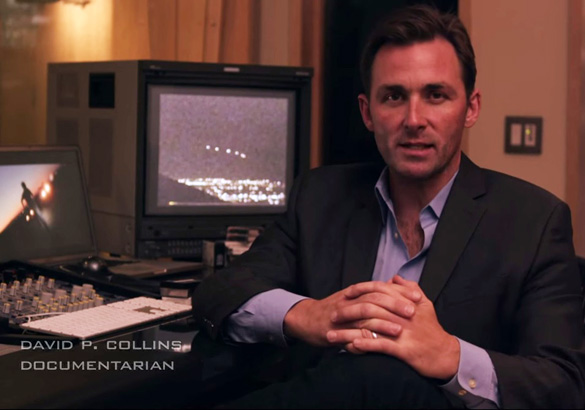

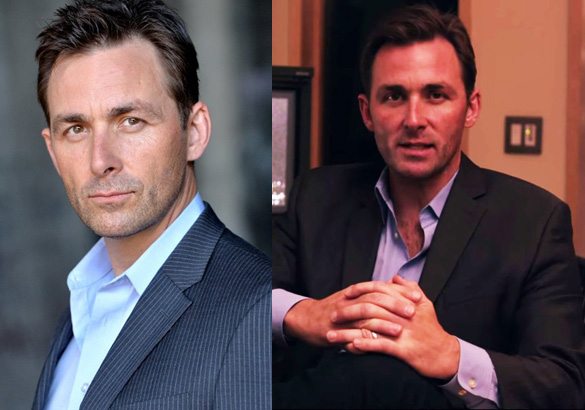

It looks like the Seinfeld Farbman sales guy is the same actor who is now portraying David Collins. Interestingly, when The Black Vault posted our story about this video, The Black Vault’s founder, John Greenewald, also labeled it a hoax. He says he received an email alleging to be from Collins, who was disappointed that Greenewald would label his video a hoax. Greenewald responded that he would be more than happy to post a retort from Collins, but has not yet received a response to this offer.
UPDATE 12/4/2014 –
It appears we have received confirmation on the actor who is portraying David Collins. We received a tweet from the same twitter account that sent out the alleged classified video. In the tweet, Collins writes: “James Patrick Stuart is a fantastic host for American Crimes, and portrays me in the series.”

Collins, if he exists, does not explain the fake news station, nor the fake cases that the American Crimes television show was supposed to cover. It is also odd that an actor would be chosen to play a news reporter to host a news television program. In every other news program the reporters appear as themselves. It might be that whoever is running this viral campaign is trying to perpetuate the illusion of its reality.



Once upon a time the official message was that there was no such things as aliens, ufos ETC.
The message has now become: “If you see an alien/ufo, run away!”.
Which is pretty interesting in – and of – itself. It seems to imply that someone, somewhere is expecting something to happen.
I can’t wait. Bring it on.
Did you ever consider the footage may be real and ‘officially’ released under a fake method so it will never be accepted as real.
I love Adam Goldsack’s comment. Further anyone trying to discredit this or call it out should watch this. It’s hard for the kettle (open minds) to call the pot (this story?) black in the case where open minds is based on “hard to believe” subject matter as it is. I found the link below and it blew me away…I don’t know who or david collins is but the conversation here is real.
https://www.youtube.com/watch?v=z3wr6_-XoRE
I for one dont love Adam Goldsacks comment. It represents the delusional nut job thinking that gives the field of ufology a bad name. There are enough real mysteries and research to be done that we dont need to waste time going to crackpot land. That ranks right up there with people that claim videos that are clearly airplanes are actually ufos, using airplane light imitation technology. Or videos of clouds, that they claim are UFOs using there cloud cloaking technology. Even if they do have such technology and that is the case, so what. You cant do anything with that. That makes the sighting absolutely worthless. What is more likely, its a UFO that looks like a cloud, or its just a cloud. Second, Daniel, your mixing two different things. No one is talking about the credibility or reality of the Phoenix light sighting. What is being discussed is whether this Collins guy and what he has put out there is real or not. Which clearly it isnt. No one is calling any pots or kettles black
I’m quite sure that this is all part of a viral campaign for the movie “The Phoenix Incident”. If you look at the photos of the missing men, and match against the cast of the movie on their IMDB page, you will see that they are the same people.
The smoking gun though, is the characters name’s in the movie match the missing persons’ names.
Case Closed people, viral stunt/campaign.
This is an interesting article being that Mr. Rojas is now included in the film that uses the actor and the footage listed above. What is real and what is fake?
Jeff K talk’s in Riddles. Adam Goldsack’s comment is a perfectly acceptable suggestion.